01FOR THE ENTERPRISE ARCHITECT
Stop losing
the map every
reorg.
Capability maps in decks. Application lists in spreadsheets. Decisions in inboxes. Atlas keeps them linked — so when the org chart changes, the architecture memory doesn't reset.
02
Built for the work you actually do
The map survives the reorg
Capabilities, applications, technologies, and decisions stay linked in one model. When the org chart changes, the architecture memory doesn't reset.
Up and running in an afternoon
Import your application list, capability hierarchy, and decision log. No six-month modeling project before the first useful answer.
AI takes the first pass
Classification, capability mapping, and rationalization suggestions arrive as drafts. You review and approve before anything commits to the model.
03Capability map
First-class citizens, not decorative
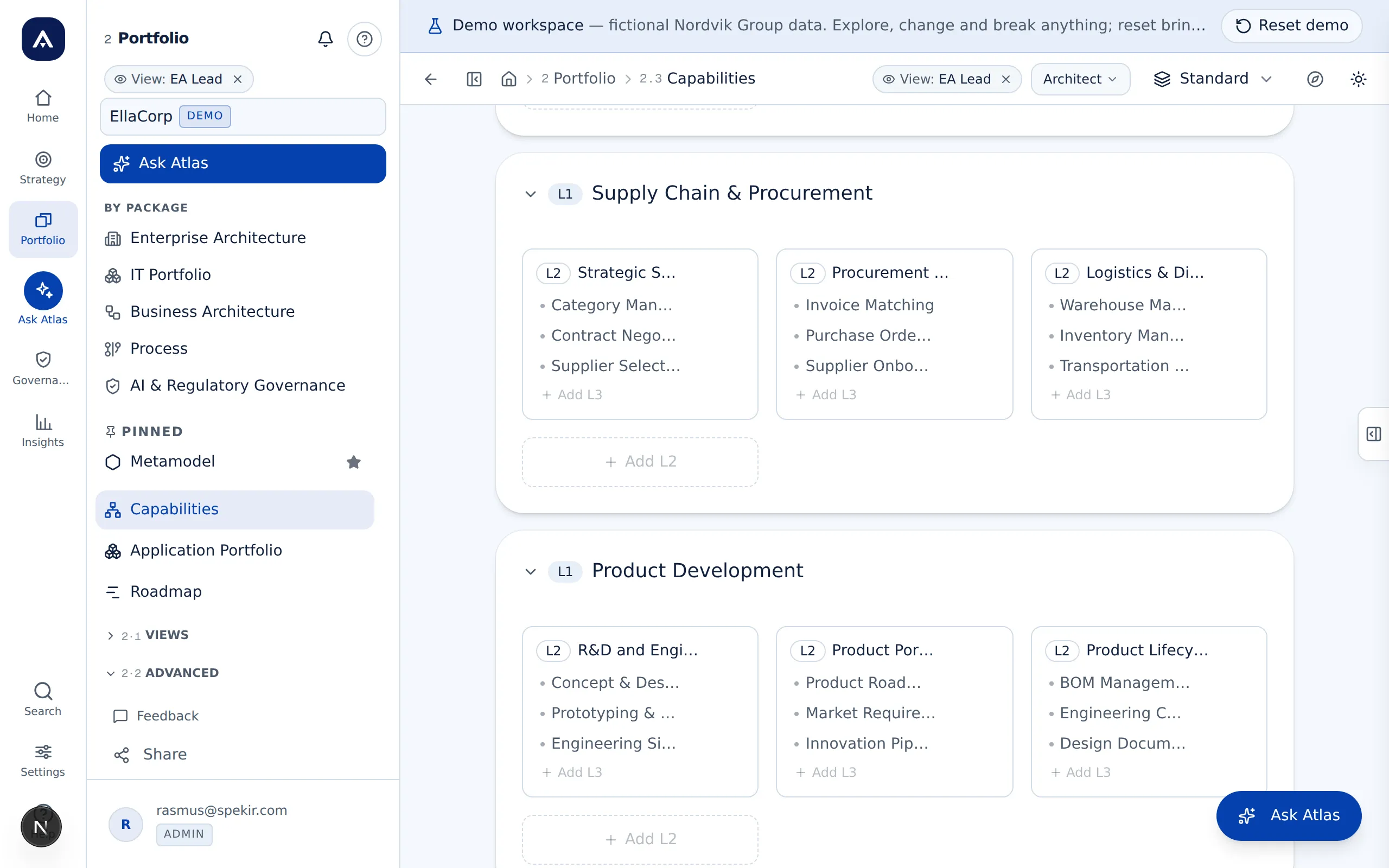
Business capabilities structured as a hierarchy. Linked to applications, technologies, decisions. Query 'which apps serve capability X' in one click — not a spreadsheet vlookup.
04Application portfolio
Owner, lifecycle, anchor
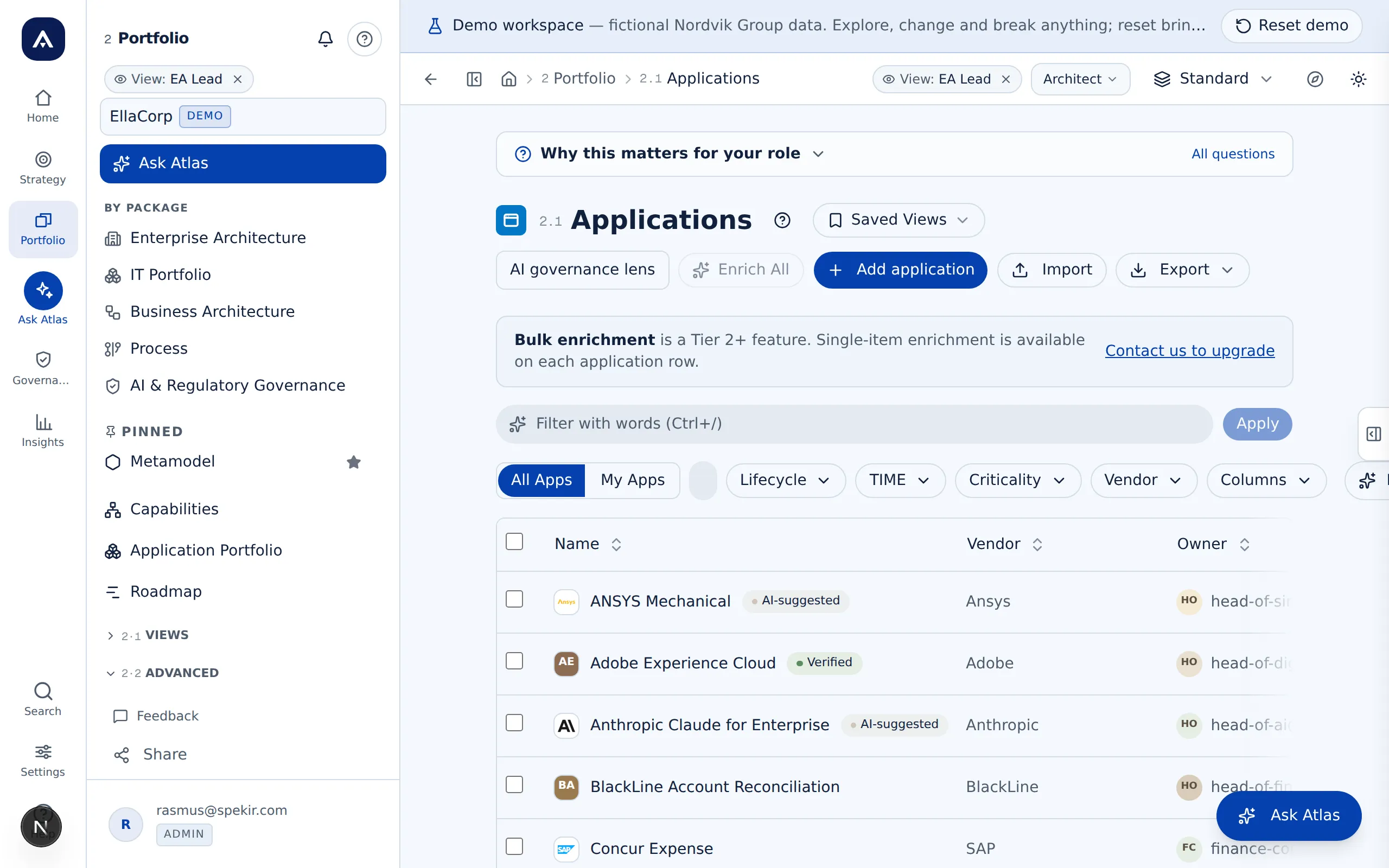
Every app has owner, stakeholders, criticality, lifecycle stage, strategic anchor. Rationalization candidates surface automatically. Retire/consolidate/protect — with reasoning linked.
05Decisions
ADR as a feature, not a wiki afterthought
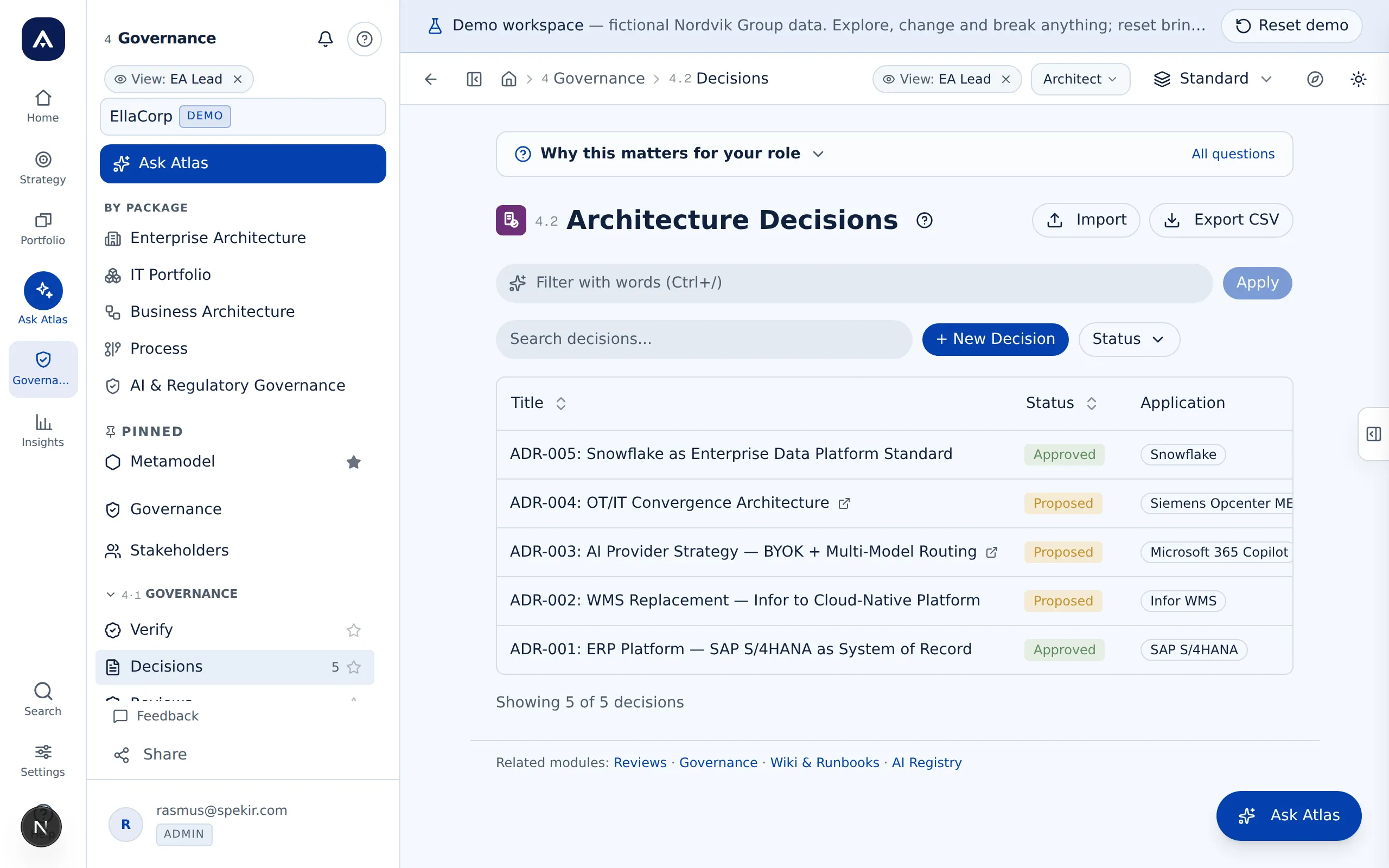
Context, decision, status, consequences, alternatives considered. Versioned. Linked to apps and capabilities it affects. The audit question 'why did we do this' has a two-click answer.
06
How EAs use Atlas
Capability map, first draft in minutes
Atlas proposes a capability hierarchy for your industry. You adjust it instead of starting from an empty canvas.
Rationalization with TIME
Tolerate, invest, migrate, eliminate — assessments suggested by AI, approved by you, visible across the portfolio.
Decisions logged where they belong
ADRs linked to the applications and capabilities they affect. Context, alternatives, consequences — versioned.
The audit question
'Why did we do this?' has a two-click answer. The reasoning lives in the model, not in a former colleague's inbox.
Presenting to leadership
The same model renders as a board view. No rebuilding the deck every quarter — the numbers and the narrative come from one place.
WHY SPEKIR
Why I built Spekir
I spent twenty-five years as an Enterprise Architect, and most of the job came down to the same thing: making clear what we have, why we have it, and what we've decided about it. That knowledge lived in my head, in decks, and in spreadsheets, and it reset every time someone changed jobs or the org chart was redrawn. Atlas is the tool I kept wishing I had. Not another EA tool for specialists, but the EA role put in a box, so a midmarket team can get the overview without building a whole function around it. That's the whole idea, and it's still where I spend my time.
07
One model, four lenses. Strategy, applications, decisions, and alignment read from the same truth — so every role sees the same portfolio.
Strategy
Playing to Win, not slideware
Themes, objectives, and initiatives — structured, linked, and traceable to execution.
Learn moreApplications
Portfolio rationalization, AI-first
Owner, lifecycle, criticality, and TIME assessment on every application.
Learn moreDecisions
ADRs that don't rot
Decisions logged inline with the systems and capabilities they affect.
Learn moreAlignment
Drift, detected
Unallocated initiatives and floating applications surface automatically.
Learn moreBuilt in Europe. Hosted in Frankfurt. Designed for evidence backed AI.
The map doesn't have to die when you change jobs.
Atlas imports your application list, capability hierarchy, and decision log in a single afternoon. The memory becomes structural, not personal.